How Many DPT Standards Cover Piling Work?
Four main DPT standards deal directly with piling: 1106-64, 1251, 1252-51 and 1551-51. DPT is the abbreviation used here for standards issued by the Department of Public Works and Town and Country Planning. Each standard has its own number, usually followed by the year of issue — for example, DPT 1106-64 is the edition issued in B.E. 2564 (2021).

← Scroll to see the full table →
| Standard | Covers | When to use |
|---|---|---|
| DPT 1106-64 | Piling work standard, covering materials, driving, cast-in-place boring, acceptable tolerances and when testing is required | Throughout piling work; the parent standard |
| DPT 1251 | Static Axial Pile Load Test | When capacity must be proven by applying real load |
| DPT 1252-51 | Dynamic Axial Pile Load Test | When the capacity of many piles must be checked in limited time |
| DPT 1551-51 | Pile Integrity Test | When you need to check whether the pile shaft has cracks or necking |
Put simply, DPT 1106-64 says how piling work must be done and when testing is required, while the other three standards say how each test method must be carried out.
The diagram below runs from DPT 1106-64 down to the conditions that trigger testing, then splits into the three test standards. Look at the “Answers” strip in each box: they fall into a load-capacity group (1251 and 1252-51) and a pile-integrity group (1551-51).
What Does DPT 1106-64, the Piling Work Standard, Cover?
DPT 1106-64 is the piling work standard and covers both driven piles and bored piles. The provisions contractors and owners run into most often are:
- Pile splicing — precast concrete piles may be spliced into no more than 2 segments and must be joined by electric welding. The steel plates cast into the pile must be at least 9 millimeters thick, and the splice plates at least 6 millimeters thick. The standard prohibits splicing in 3 cases: piles that must resist lateral loads, piles in soil layers at risk of sliding, and piles whose tips bear on sloping rock.
- Hammer weight — the driving hammer must weigh at least 70 percent of the pile weight and no less than 3 metric tons.
- Spacing during boring — a new bored pile must be at least 6 times the diameter of the larger pile away, center to center, from any pile cast within the previous 24 hours; in soft clay a greater spacing may be needed.
- Position tolerance — for foundations with 1–2 piles, an offset of no more than 50 millimeters is allowed; for foundations with 3 or more piles, no more than 75 millimeters; and the center of a pile group may be offset by no more than 50 millimeters. For piles larger than 600 millimeters, the maximum tolerance is at the discretion of the design engineer. If measured offsets exceed the limits, see what to do when pile offset exceeds 75 mm
- Inclination — deviation from vertical must not exceed 1 percent of the pile length.
- Record forms — driving work uses DPT Form 1106-1 and bored pile work uses DPT Form 1106-2. These two records are the traceable evidence when disputes arise.
The standard also states that using any standard other than those referenced requires approval from the Building Control Committee or the Council of Engineers Thailand, and that if another standard conflicts with DPT 1106-64, this standard prevails. Wet-process bored piles must comply with EIT standard 1019.
When Does DPT Require Pile Testing?
DPT 1106-64 clearly sets out the cases in which piles must be tested. This is often overlooked, because people tend to assume the standard only describes test methods. There are 4 common cases:
- Drawings do not specify a test method — if the drawings or the project-specific specifications do not detail a load test method, the default is a static load test per DPT 1251. This answers a question contractors ask often: what to do when the spec is silent.
- Cracked pile repaired — the damaged concrete of a cracked pile must be chipped out and recast, and after redriving, a pile integrity test must be performed.
- Bored pile shape deviates from the design — if the size or shape deviates, test by the vibration (sonic) method or another method approved by the supervising engineer.
- Widespread damage to driven piles — if 10 percent of driven piles are damaged, drive an additional 10 piles for checking. If these are also damaged, the work is deemed non-compliant with the standard and must be verified by engineering analysis or testing.
For how many piles should be tested, see how many piles need to be tested
What Is DPT 1251, the Static Load Test Standard?
DPT 1251 is the standard for static axial pile load testing, known on site as the Static Load Test. The method applies real load to the pile head in increments and measures the settlement at each increment.
Its advantage is that load and settlement are measured directly, closest to actual service conditions. Its limitations are that it takes considerable time and space and requires a reaction frame or kentledge, so it costs much more than other methods. Reports usually cite it together with ASTM D1143/D1143M-20e1. For the procedure, see Static Load Test: pile testing by applying real load
How Does DPT 1252-51 Dynamic Testing Differ from DPT 1251?
DPT 1252-51 is the standard for dynamic axial pile load testing, which corresponds to the Dynamic Load Test or PDA in site terminology. A drop weight strikes the pile head and the stress waves traveling down and reflecting back are measured to back-calculate the load capacity.
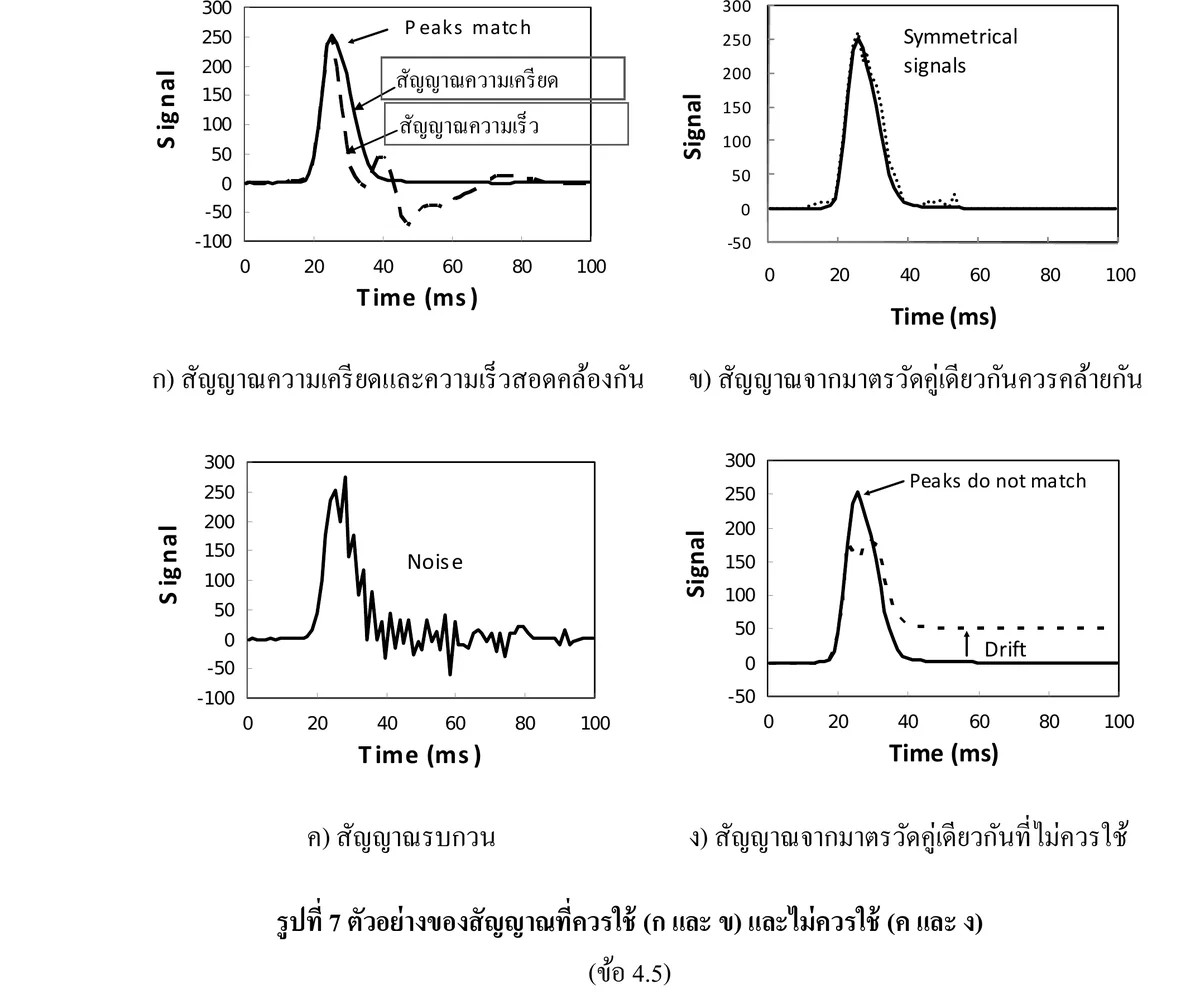
Unlike DPT 1251, each pile takes only hours, and many piles can be tested in a single day, making it well suited to quantitative checking across a project. However, the result is back-calculated from signals rather than a direct settlement measurement, so its quality depends on signal quality and the CAPWAP analysis. Reports usually cite it together with ASTM D4945 (current edition D4945-26). For how to read the results, see how to interpret PDA test results, and for an overview of the method see what is a Dynamic Load Test (PDA)
What Does DPT 1551-51 Pile Integrity Testing Check?
DPT 1551-51 is the standard for pile integrity testing, corresponding to the Seismic Integrity Test or Low Strain Pile Integrity Test. The pile head is tapped with a small hammer and the reflected wave is measured to see whether the pile shaft has cracks, necking or discontinuities.

It must be clearly understood that DPT 1551-51 does not indicate load capacity. A pile that passes the integrity test has no detectable anomalies in its shaft; it does not mean the pile can carry its design load. To confirm capacity you need DPT 1251 or 1252-51. Read more at what is a Seismic Integrity Test
DPT vs ASTM: How Do They Differ and Which Should You Use?
You don’t have to choose, because the two serve different purposes. DPT standards are Thai construction standards that are usually cited in contracts and specifications, while ASTM standards are international test method standards that specify procedures and equipment in greater detail. In practice, test reports for projects in Thailand usually cite both together.
← Scroll to see the full table →
| Test method | Thai standard | International standard used alongside |
|---|---|---|
| Static Axial Pile Load Test | DPT 1251 | ASTM D1143/D1143M-20e1 |
| Dynamic Axial Pile Load Test | DPT 1252-51 | ASTM D4945 (current edition D4945-26) |
| Pile Integrity Test | DPT 1551-51 | Method per ASTM D5882-16 (withdrawn by ASTM in 2025) |
Note: ASTM D5882-16 was withdrawn by ASTM in 2025, so integrity testing in Thailand relies on DPT 1551-51 as the main criterion. When citing ASTM in a report, always state the designation and year clearly. For a detailed comparison of the ASTM side, see ASTM D5882, D4945, D1143: how they differ. DPT 1106-64 also references the TIS 395 to 399 series of product standards for precast concrete piles and EIT standard 1019 for wet-process bored piles.
The 3D view below brings all three methods onto one site, each labeled with its DPT standard and the ASTM standard used with it. The frame on the right helps you choose a standard by the question you need answered: for load capacity, see items 1–2; for pile shaft integrity, see item 3.
How Do You Apply DPT Pile Testing Standards on a Real Project?
Owners and contractors can apply DPT standards on a real project at 3 points: before piling starts, during the work, and when receiving the test report.
1. Check the spec before work starts — open the specifications and check whether a test standard is specified. If not, the default under DPT 1106-64 is the static method, which costs much more and takes much longer than other methods, so agree on this clearly with the design engineer before piling begins. For the legal requirements, see separately pile testing under the Foundation Ministerial Regulation B.E. 2566 (2023)
2. Keep the record forms complete — DPT Form 1106-1 for driving and DPT Form 1106-2 for boring are the evidence you can refer back to when pile quality is questioned.
3. Check that the report cites the standard actually used — a good report states the standard, method and equipment used, and is signed and certified by a civil engineer licensed by the Council of Engineers Thailand (COE). See what it should contain in the pile test report checklist
As for fees, SPN’s dynamic load testing (PDA) is about THB 5,500 per pile, pile integrity testing (Seismic Integrity Test) is about THB 100–150 per pile, and a Static Load Test ranges from THB 50,000–150,000 or more per pile, depending on the test load and the reaction system used. These prices exclude travel and equipment mobilization, which are charged according to the distance to site. For other test methods or jobs with special conditions, contact us for a free quotation within 24 hrs.
This content summarizes the key points of the standards for a basic understanding and does not replace the full standards. The test method, number of piles and acceptance criteria for each project must be set by the responsible engineer, always with reference to the actual standards.