Frequently asked questions about pile load testing in Thailand
How many piles need to be tested?
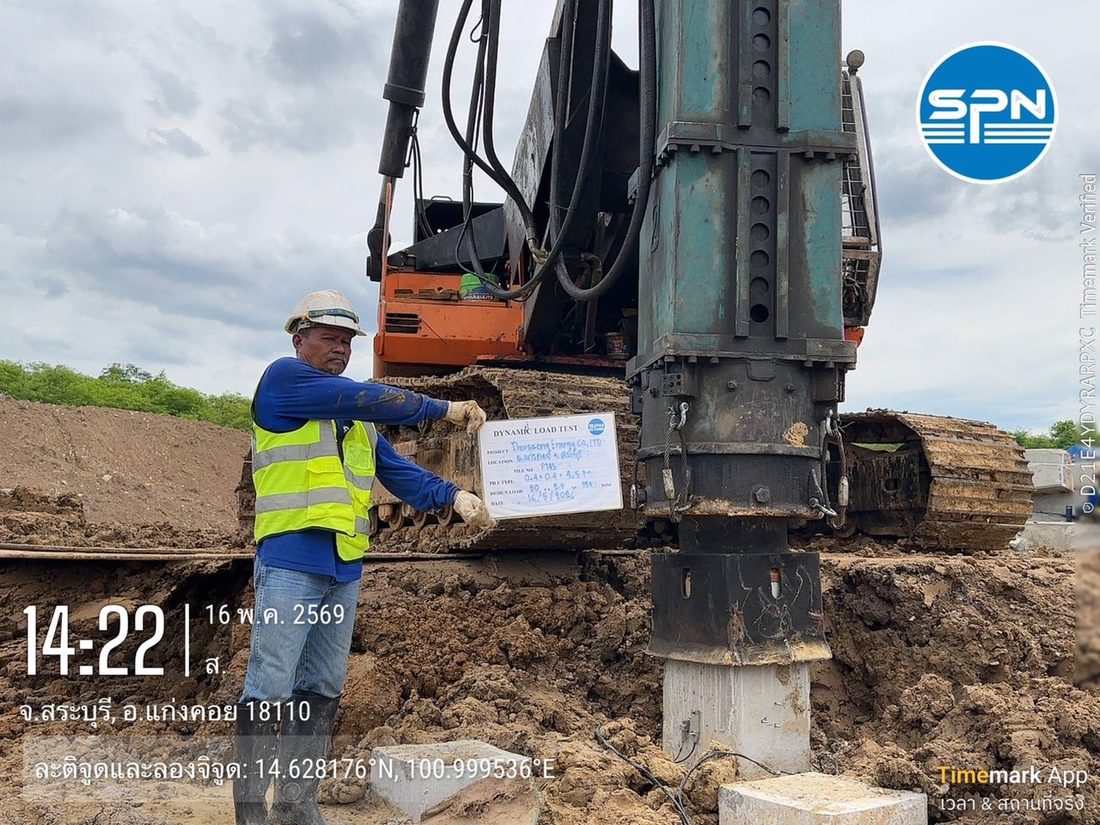
It depends on the test method and the design engineer's specification. A common practice is a Seismic Integrity Test on all or nearly all piles, and a Dynamic Load Test (PDA) on about 1–2% of piles and at least one pile, subject to each project's specification. Small buildings may test 2–3 piles; large projects may need more.
What load is used in a static load test?
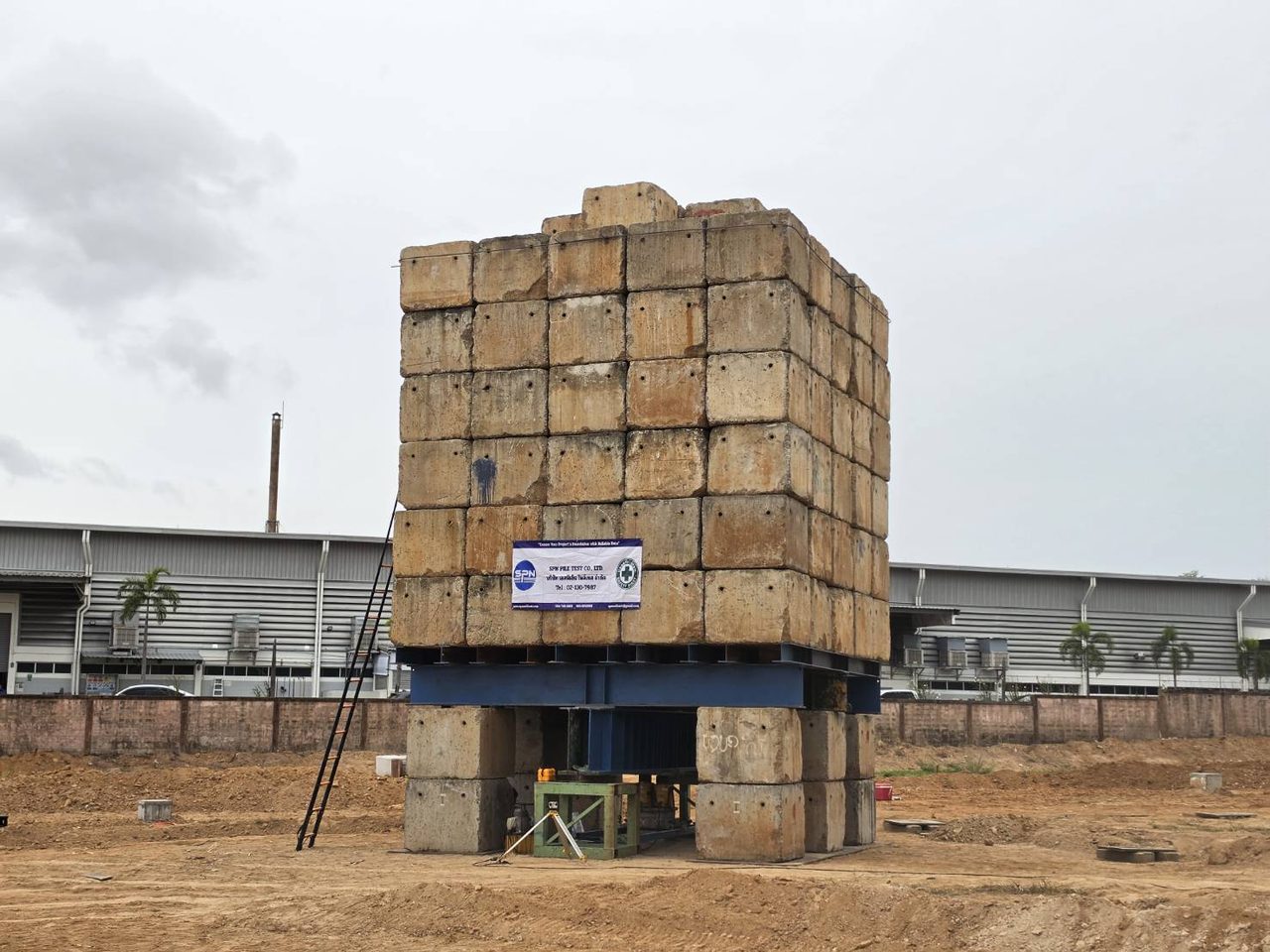
The maximum test load is commonly 2–3 times the design load, subject to each project's specification. Load is applied in increments, held at the maximum, then released while settlement and rebound are recorded to ASTM D1143.
Which pile types can be tested with PDA?
PDA can be used on driven prestressed concrete piles, cast-in-place bored piles, steel piles and timber piles. Our engineers recommend the right setup for each pile type.
How long does a static load test take?
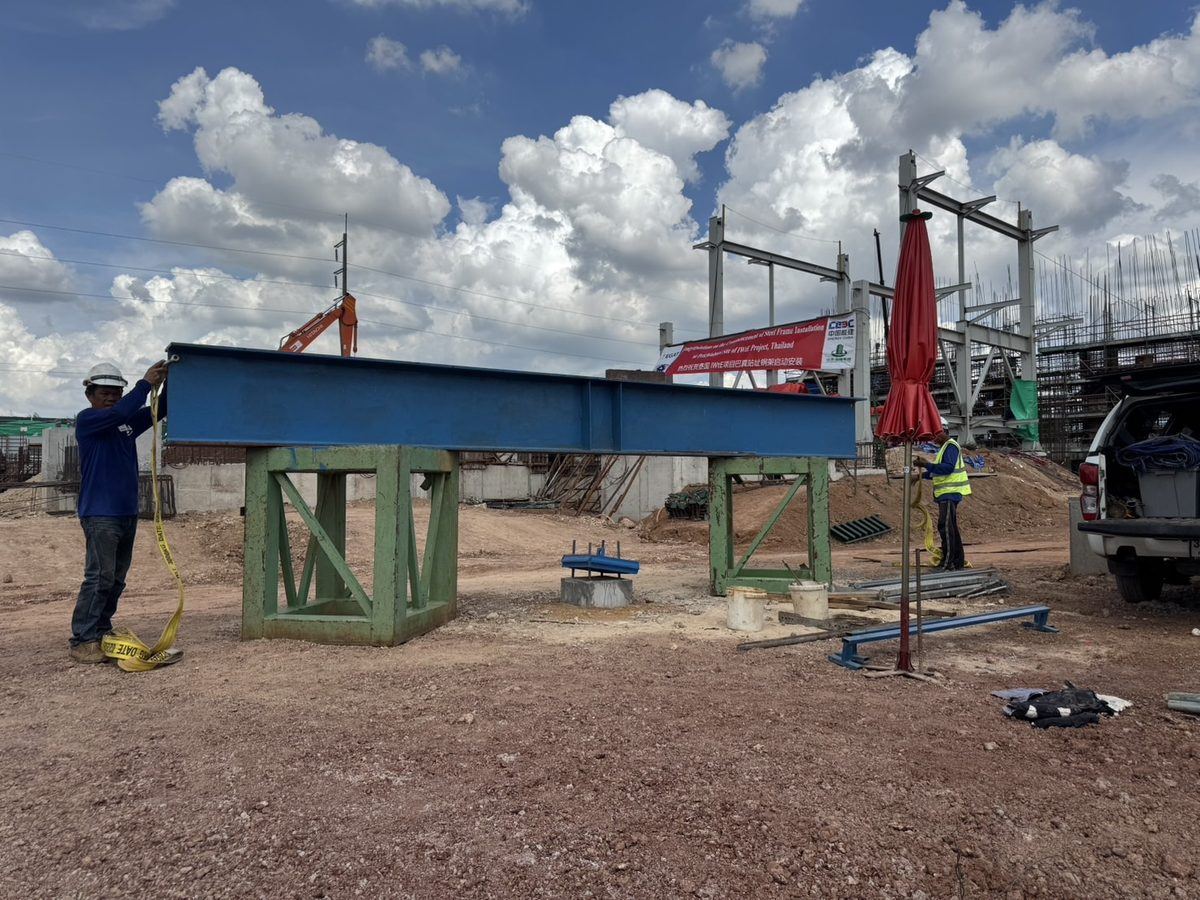
Testing one pile takes 1–3 days, depending on the protocol (quick test or slow maintained load). Allow another 1–2 days to set up the equipment and reaction load.
Can a seismic test tell me the pile capacity?
No. A seismic (low strain) test shows only pile integrity, such as cracks, necking or breaks. To know capacity you need a Dynamic Load Test (PDA) or a Static Load Test.
What is the difference between CSL and a seismic integrity test?
A seismic integrity test uses a hammer blow on the pile head, works on all pile types and is fast and economical, but has lower resolution. CSL uses access tubes cast into the pile, gives more detailed results, and suits large bored piles.
Can you check the piles of an old building with no drawings?
Yes. Parallel Seismic (ASTM D8381) finds the length of existing piles without exposing the pile head, combined with inspection pits, Seismic Integrity Test or Side Echo Test, concrete NDT and soil boring to assess capacity before purchase or extension.
Can piles under an existing footing still be tested for integrity?
Yes, with the Side Echo Test. A pit is dug beside the footing and the sensor is fixed to the side of the pile; length can be estimated only when a clear toe reflection is seen, so Parallel Seismic is recommended to confirm length directly.
Do you work outside Bangkok and inside industrial estates?
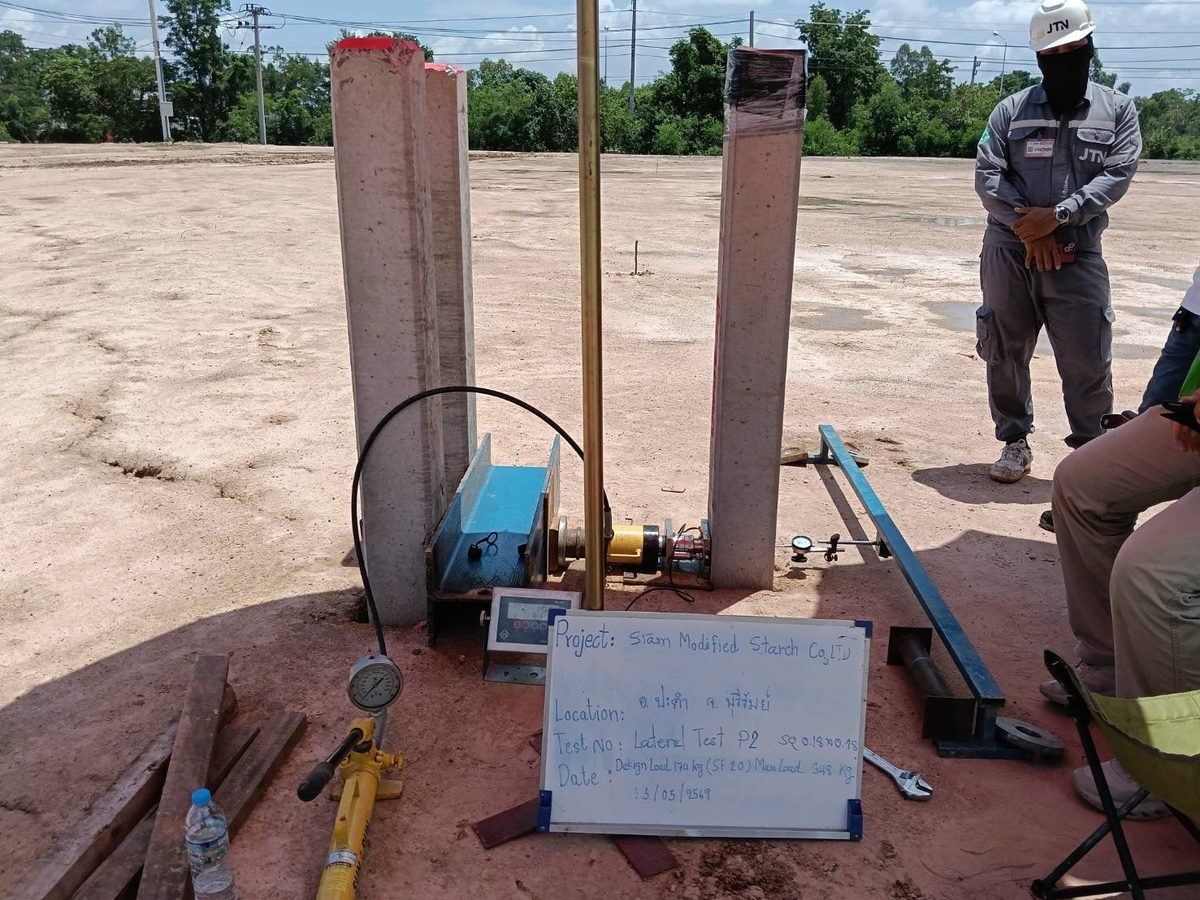
Yes. Our team works in all 77 provinces from our office in Bang Sao Thong, Samut Prakan, with regular work in the Eastern region/EEC (Chonburi, Rayong, Prachinburi) and the Central region (Ayutthaya, Saraburi, Kanchanaburi). We follow each industrial estate's safety rules; testing is priced per project with a free quotation within 24 hours.