Which Soil Boring Methods Are Used in Thailand?

Soil boring is the drilling of a small-diameter hole into the ground to take samples and test the properties of each soil layer. The method chosen depends on the soil type, the target depth and site conditions. The 3 main methods are compared in the table below.

← Scroll to see the full table →

Comparison of the 3 main soil boring methods used in Thailand
TopicWash BoringRotary DrillingHand Auger
PrincipleWater jet flushes soil up while the bit chops the soilDrill rods and bit rotate; water or drilling fluid supports the holeAuger turned by hand to bring up soil
Suitable depthMost general work (several tens of meters)Very deep work or drilling through hard layersShallow work of about 3–6 meters
Suitable soil conditionsClays, sands, general soilsAll conditions, including very hard soil, gravel and rockSoft to medium-stiff soil above the groundwater level
Rock coringNoYes (per ASTM D2113)No
Standard SPT possibleYesYesGenerally not
Relative cost💰 Most economical for general work💰💰–💰💰💰 Higher💰 Low (limited scope)

The model below places all 3 methods on the same soil profile. The main differences are the depth that can be reached, the layers that can be penetrated and the ability to perform standard SPT.

3D model comparing 3 boring methods, Hand Auger, Wash Boring and Rotary Drilling, on the same soil profile A 3D view of a long block of ground cut away to show the soil layers: fill, soft clay, stiff clay, dense sand and a rock layer at the bottom. The groundwater level is a dashed blue line. On the left, a worker turns a hand auger in a shallow hole about 3 to 6 meters deep, stopping at the groundwater level or stiff soil, with no standard SPT. In the middle is a tripod wash-boring rig with a water pump and SPT hammer, with a hole several tens of meters deep reaching the dense sand and SPT test points at intervals. On the right is a skid-mounted rotary drilling rig with a mast and rotary drive head, drilling through hard layers into rock and taking rock cores per ASTM D2113. Depths in the image are not to scale. 3D model — 3 boring methods, same soil profile Not to scale Hand Auger Auger · ~3–6 m Wash Boring Most used · SPT OK Rotary Drilling Deep / hard / rock Stops at GWL/stiff No standard SPT To dense sand SPT @ ~1.5 m Rock coring ASTM D2113 GW level Rock Depth not to scale
3D model — the hand auger drills shallow, about 3–6 m, and stops at the groundwater level or stiff soil; wash boring drills several tens of meters with SPT at intervals; rotary drilling penetrates hard layers into rock and takes rock cores per ASTM D2113 (depth not to scale)

What Is Wash Boring? Why Is It the Most Common in Thailand?

Wash boring is a method that pumps pressurized water down through the drill rods to the bottom of the hole. The water carries soil cuttings up through the annulus between the rods and the hole wall, while the bit is chopped and rotated to cut the soil. It uses a tripod rig that is easy to dismantle, assemble and transport.

This method is the most common in Thailand because it suits most of the country's soil conditions, especially Bangkok soft clay and general sands. The equipment can reach almost any site, from houses to factories, and it is the most economical option for the depths that typical buildings require. During drilling, the crew stops to perform SPT and take soil samples at specified depth intervals.
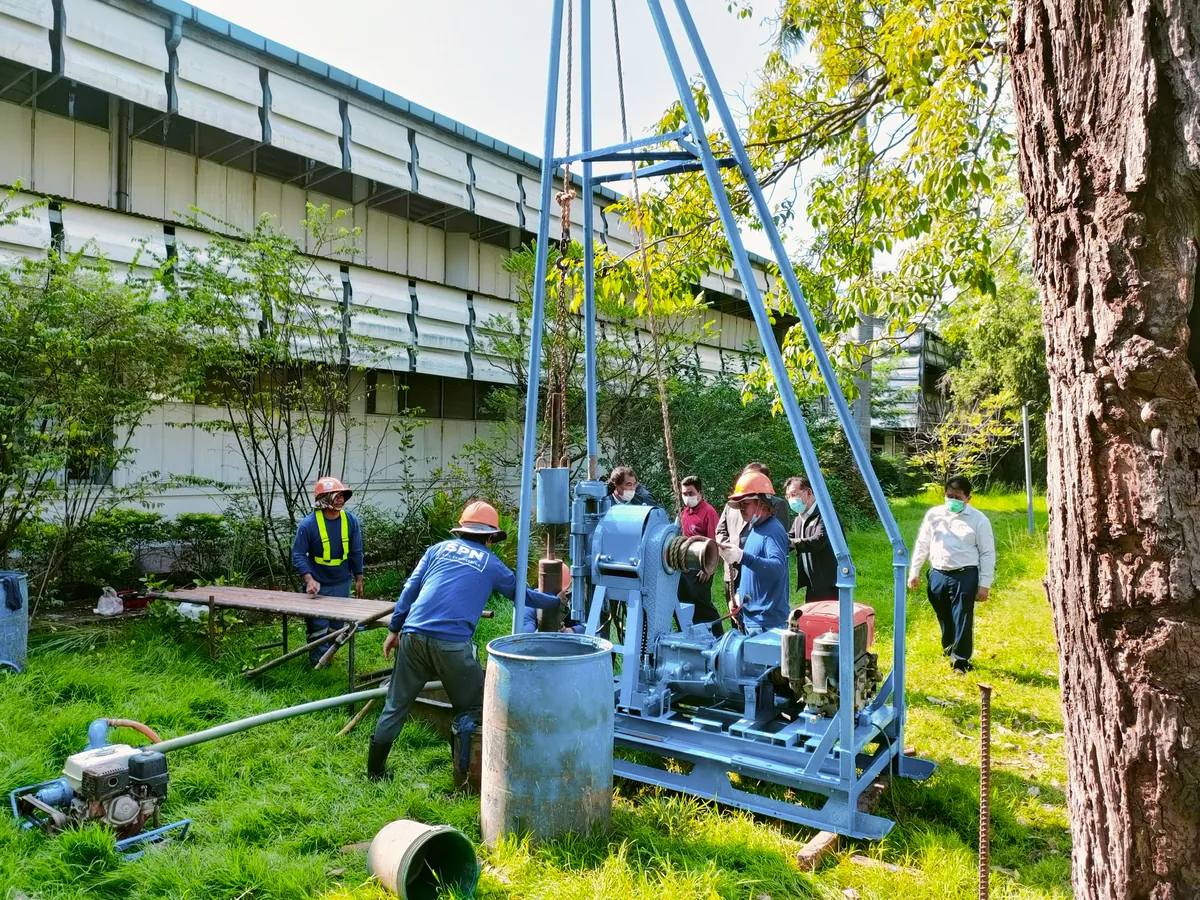
A tripod soil boring rig performing wash boring, with crew at the borehole and an engineer observing
A tripod rig with wash boring — the most widely used soil boring method in Thailand (photo: actual SPN site)
Components of wash-boring soil investigation Elevation and section of a tripod wash-boring rig. At the top is the tripod, made of steel pipe or timber, with a sheave at the apex for lifting drill rods, the hammer and pulling casing. An engine with a winch or cathead stands on the left; the rope wraps the cathead, runs up over the sheave and down to the water swivel at the top of the drill rods. A water pump on the right draws water from the sump and sends it through a hose into the water swivel. The water flows down the drill rods and jets out at the chopping bit at the bottom of the hole. The water carries soil cuttings back up the annulus between the drill rods and the casing, out through the wash tee at the top of the casing and into the sump, where the cuttings are inspected and the water is recirculated. The casing has a shoe at its tip to keep the hole wall from collapsing in soft soil. Drilling stops at intervals for SPT and sampling. Wash Boring — components and water flow Not to scale Tripod Steel pipe or timber Crown sheave Lifts rods / pulls casing Engine + cathead Rope hoist up/down Water swivel Water into rods, rotates Water pump From sump to rods Wash tee Water + cuttings out Sump Inspect & recycle Casing Holds hole in soft soil Casing shoe Chopping bit Water jets out, cuts soil Water down rods ↓ Water + cuttings up ↑ Drilling pauses for SPT and sampling at intervals
Wash boring components — the pump sends water through the water swivel down the drill rods; it jets out at the chopping bit and carries cuttings up the annulus between the rods and the casing, out through the wash tee into the sump. The engine and cathead raise and lower the drill rods and the SPT hammer.

What Is Rotary Drilling? When Is It Needed?

Rotary drilling is a method in which an engine continuously rotates the drill rods and bit to cut the soil, together with circulating water or drilling fluid to carry cuttings up and prevent the hole from collapsing. It drills faster and deeper than wash boring.

Jobs that typically require rotary drilling include:

  • Drilling through very hard soil, gravel or rock — including rock coring per ASTM D2113, which wash boring cannot do
  • Extra-deep boring — high-rise buildings, bridges or large infrastructure that need very deep soil data
  • Jobs with tight schedules — many boreholes and a need for fast fieldwork
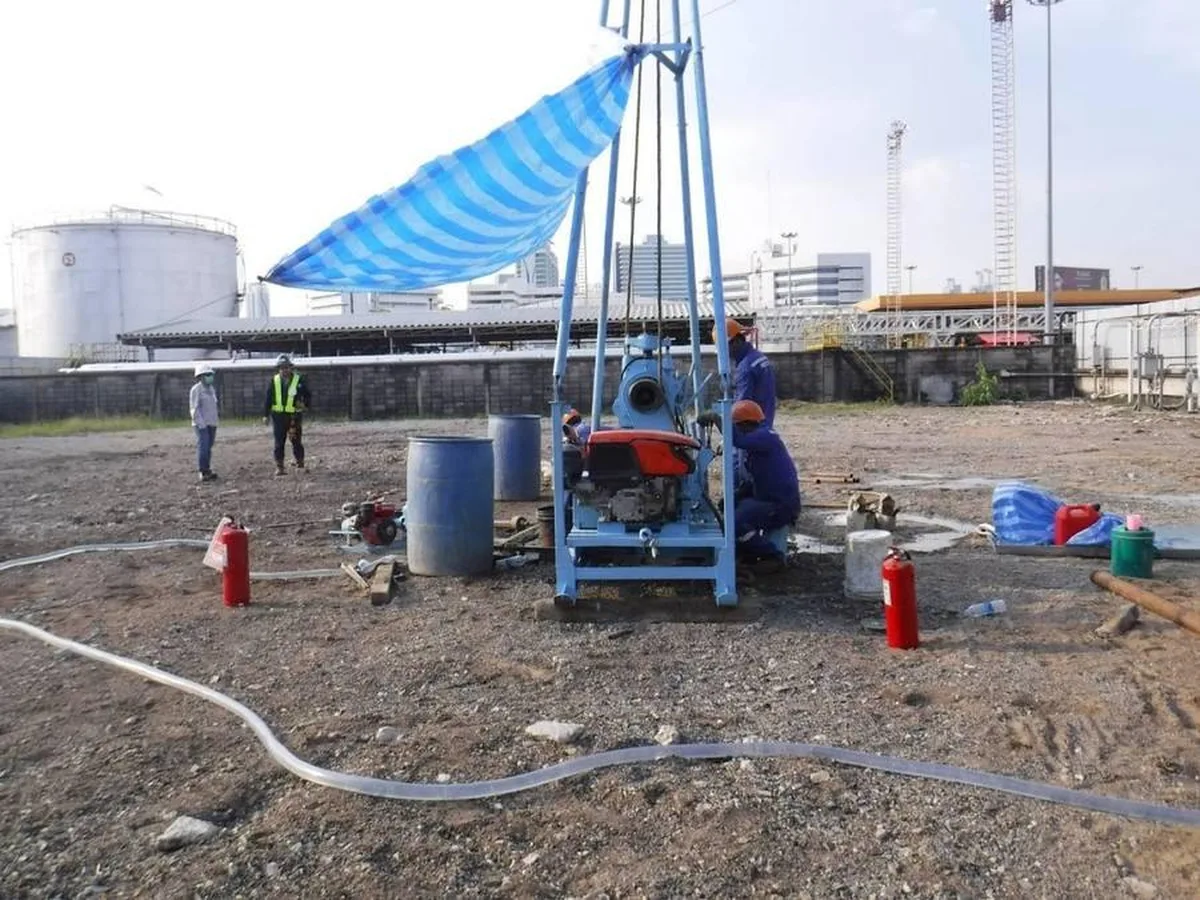
A rotary soil drilling rig mounted on a steel base at an oil depot, with crew operating the machine
A rotary drilling rig in soil investigation at an oil depot — a high-security area that requires a work permit in advance (photo: actual SPN site)
Components of rotary drilling and drilling-fluid circulation Elevation and section of a skid-mounted rotary drilling rig. A mast stands upright over the hole; the rotary drive head slides up and down the mast and rotates the drill rods continuously. At the top is a mud swivel that receives drilling fluid from the mud pump. The drill rods extend down through the casing at the top of the hole to the bit at the bottom, which cuts through hard soil into rock. The drilling fluid flows down the drill rods, out at the bit, and carries soil and rock cuttings back up the annulus around the rods, out through a channel to the settling pit, then overflows into the main mud pit where the pump draws it back for reuse. On reaching rock, the bit is changed to a core barrel per ASTM D2113. Rotary Drilling — components and mud circulation Not to scale Mast Guides drive head Mud swivel Fluid into rods Rotary drive Rotates rods continuously Engine + winch Mud pump Pumps drilling fluid Settling pit → mud pit Cuttings settle, mud reused Casing Drill pipe Bit / core barrel Cuts hard soil/rock (ASTM D2113) Fluid down rods ↓ Soil/rock cuttings up ↑ Rock
Rotary drilling components — the drive head on the mast rotates the drill rods continuously; the mud pump sends drilling fluid down the rods to carry soil and rock cuttings up to settle in the pit before being recirculated. On reaching rock, the bit is changed to a core barrel.

What Work Is a Hand Auger Suitable For?

A hand auger is a manually operated soil boring tool; the auger is turned to bring soil up one section at a time. It suits shallow work of about 3–6 meters in soft to medium-stiff soil. Its strengths are access to areas machinery cannot reach at all, such as steep slopes, forests or buildings with low ceilings, and low cost.

Its main limitations are that it cannot penetrate stiff soil or gravel, it is hard to bore below the groundwater level because the hole collapses easily, and it generally cannot perform standard SPT. It is therefore better suited to preliminary investigations, environmental work or shallow soil sampling than to building foundation design.

Can Every Method Perform SPT the Same Way?

No. The Standard Penetration Test (SPT) per ASTM D1586 must be performed in a clean borehole of suitable size as specified by the standard, which in Thai investigation practice comes from wash boring or rotary drilling (read how to interpret results in What Is the SPT N-Value and How to Interpret It). For hand-auger work or sites where a rig cannot be set up, engineers may use alternative tests such as DCP or KPT instead, which give data at a different level of detail — compare the differences in DCP vs KPT vs SPT: What's the Difference?
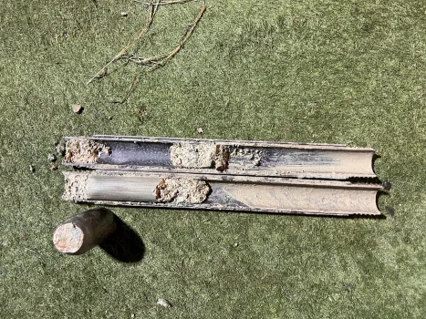
A split-spoon soil sampler opened to show the soil sample from the SPT
A by-product of SPT — the soil sample in the split spoon, brought up to classify the soil layers and sent on for laboratory testing (photo: actual SPN site)

So Which Method Should Your Job Use?

The good news is that owners don't have to choose — the service provider's engineer selects the boring method to suit the building type, the depth the designer requires and site conditions, and states it clearly in the quotation. Most houses and general buildings in Thailand are done with wash boring plus SPT, the standard package of SPN's soil investigation and testing services — fees start at about THB 20,000–40,000 for 2–3 boreholes, including basic laboratory testing and an engineer-certified report (details in House Soil Boring Prices 2026). This price excludes travel and equipment mobilization, which are charged extra according to the distance to the site.

Whichever method is used, the final result is a boring log and a soil investigation report certified by a civil engineer licensed by the Council of Engineers, equally valid for building permit applications.