Why are soil conditions the biggest "hidden cost" of vacant land?
The price on the listing is only part of the cost — the other, invisible part is the foundation cost, which depends directly on the soil layers beneath the plot. Land with a shallow firm layer may be able to use spread footings or short piles, while land with thick soft soil needs long piles driven down to the firm stratum. Pile costs can therefore differ several-fold even for the very same building.
💰 Illustrative comparison (not actual prices — pile cost depends on type, size, length and each contractor):
- Shallow firm layer → spread footing / short piles → foundation cost level 💰
- Moderately soft soil → medium-length driven piles → level 💰💰
- Very thick soft soil (e.g. the Central Plains lowlands) → piles 20 m or longer → level 💰💰💰
If you know this number before transfer, you can use it to negotiate the price, set your budget or choose another plot. If you find out after transfer, your only option is to pay more. (Read more on how soil boring prevents house settlement in Why soil investigation is needed before building a house.)
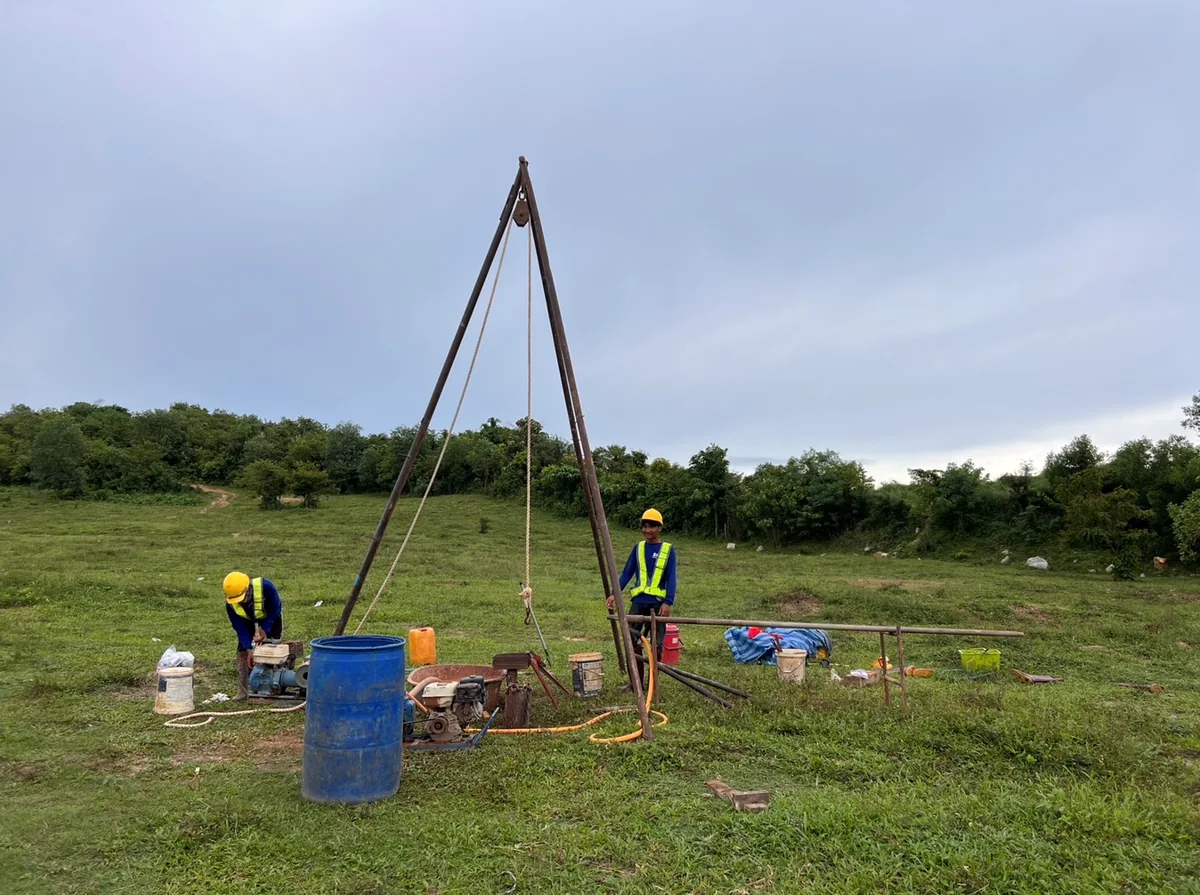
The figure below compares two plots listed at the same price, on which the same house will be built. The whole difference lies below the ground surface, and a screening borehole is what reveals it before transfer.
What kind of land should have a soil boring before you decide to buy?
Every vacant plot bought for construction should have its soil conditions known before transfer, but plots showing the following signs should never skip this step:
- Newly filled land — the fill has not yet consolidated and is often placed over weak original soil. From the surface there is no way to tell what lies beneath the fill: an old pond, former rice paddy or buried waste.
- Former pond, pool or rice paddy, or close to a water body — areas that once held water often have thicker soft clay or silt layers than the surrounding area.
- Water ponds for a long time after rain — a sign of slow-draining soil, usually clay or fine silt.
- Neighboring buildings show settlement/cracking — a sign that the soil in that area has settlement problems.
- Located in the Central Plains lowlands — Bangkok and its surrounding provinces have soft clay 12–18 meters thick (read about Bangkok soft clay). Knowing the actual soft-layer thickness on your plot helps assess the foundation system required.
The model below brings all 5 warning signs together on a single plot. Several can be seen from the surface, but the most important ones — such as an old pond beneath the fill or the thickness of the soft soil — can only be found by boring.
For land bought to build a factory or warehouse, there are additional issues such as floor load capacity and internal roads. See the dedicated checklist in Before buying land for a factory: an engineer's soil checklist.
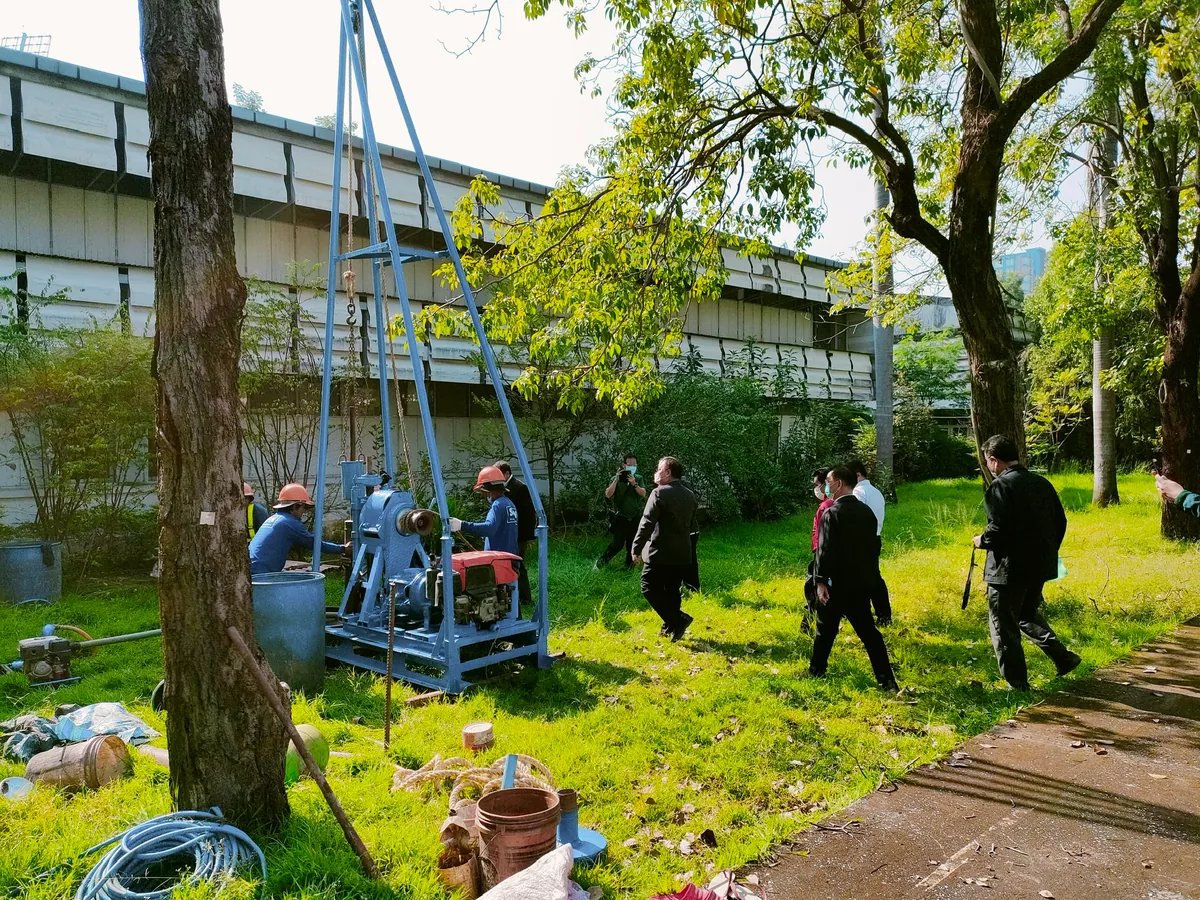
Soil boring before buying land: how many boreholes and how long does it take?
For pre-purchase screening, 1–2 boreholes per plot are generally enough to establish the main soil profile, the thickness of the soft layer and the level of the firm layer — unlike boring for actual design, where the engineer sets the number of boreholes according to building size (see the principles in How many boreholes and how deep?).
Field work takes about 1–2 days per plot, and the complete report is delivered within about 7–14 working days after field work ends (see the detailed timeline in How long does a soil investigation take?), so it can be finished before the transfer date if you start early enough.
Not the landowner yet — how can you do a soil boring?
Soil investigation on someone else's land always requires the landowner's consent first. The approaches buyers use in practice are:
- Ask the seller for consent directly — sellers who are confident in their land rarely object, because the borehole is small (about 10–15 cm) and is backfilled after the work.
- Make it a condition in the sale-and-purchase agreement — have the due diligence period cover the soil investigation before the transfer date.
- If the seller refuses any boring — the buyer should weigh this limitation in their own decision and price negotiation.
Contract conditions should be reviewed with a legal professional or your broker — SPN can provide engineering information but is not a legal advisor.
What do soil boring results tell a land buyer?
A screening soil investigation report answers 4 key questions for the buyer:
- How thick is the soft layer — this governs how long the piles need to be.
- How deep is the firm layer (sand / stiff soil) — the approximate pile tip level.
- The density of each layer from the SPT N-value — a standard number every engineer reads the same way (how to interpret N-values).
- Groundwater level — affects foundation excavation and basements.
This data lets the design engineer assess the foundation system from real data instead of the presumptive values allowed by law, which are safe but very conservative (see the comparison in No soil test: what values does the law allow?). The actual pile type, size and length must still be determined by the project's design engineer and cannot be concluded from the soil investigation report alone.
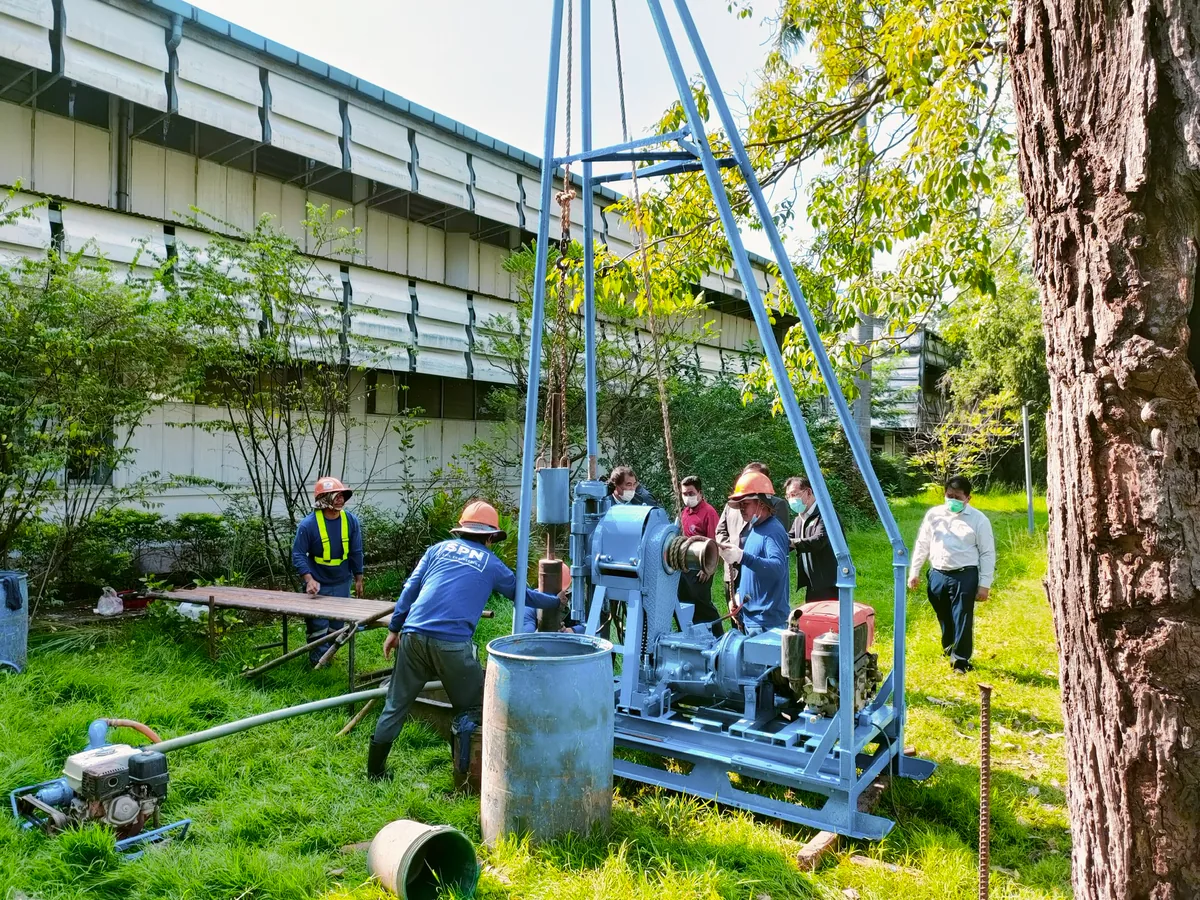
Soil boring cost versus risk: is it worth it?
SPN's soil investigation service starts at about THB 20,000–40,000 (2–3 boreholes, including basic lab tests and a report certified by a civil engineer licensed by the Council of Engineers Thailand (COE), usable for a building permit application — see pricing details in House soil boring prices 2026).
This price excludes travel and equipment mobilization costs, which are charged extra depending on the distance to site.
Compared with land prices in the hundreds of thousands to millions of baht, and foundation costs that can differ several-fold between a good-soil plot and a soft-soil plot, the boring cost is a very small fraction of the value of the decision — and if you do buy the plot, the same report can be used straight away for foundation design, so you don't pay twice.
Summary: soil boring before buying land means buying "information" before paying the big sum
Vacant land bought for construction should have its soil profile known before transfer, especially newly filled land, land near water and land in soft-soil areas. Screening with 1–2 boreholes takes only 1–2 days of field work, with the complete report delivered within about 7–14 working days, giving you data for price negotiation, budgeting and the foundation design that follows. SPN's engineering team is ready to advise how many boreholes your plot needs and how deep — request a free quote within 24 hours.